
The digital transformation led by fintech companies in recent years promises accessibility, speed, and financial inclusion, but as this transformation has accelerated, the risks have also become more sophisticated. Within an ecosystem driven by data and automation, fraud and internal threats are no longer isolated incidents: they are structural vulnerabilities.
Safety culture: an unresolved issue
One of the most concerning factors is the lack of a data protection culture, not only within fintech companies but also in the societies around them. Cases such as that of Hong Kong in 2024, where sensitive information from job applicants was used for identity theft, demonstrate how easy it is for malicious actors to build complete profiles using publicly available data.
In Singapore, a government agency accidentally released thousands of NRIC numbers on a public portal. Although access was restricted days later, automated search engines had already done their work. The consequences were immediate: banks changed their authentication policies, and citizens had to change passwords based on that data. (FinTech – What’s New and What’s Needed, 2025)
When the threat doesn't come from a hacker… but from an employee
Internal internal fraud is a silent threat. Often disguised as human error or negligence, it has real-world consequences: from credential leaks to unauthorized payments. According to the Global Cybersecurity Outlook 2025 from the World Economic Forum, 71% of cybersecurity leaders believe that small and medium-sized organizations have already crossed the threshold where they cannot protect themselves from the growing level of cyber risk.
And while regulations aim to strengthen resilience, their fragmentation adds to the complexity. More than 76% of the CISOs surveyed say that this fragmentation directly affects their ability to comply with regulations.
AI
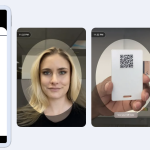
Cases of fraud involving the use of generative artificial intelligence to clone faces or voices are on the rise. To counter this, new technologies are emerging that use biometrics to enhance security. Although these systems are more secure than traditional ones, they also present a new challenge: the irreversibility of the damage. A credit card can be replaced; your veins cannot. Biometric authentication, while powerful, requires additional layers of backup and liveness detection to prevent impersonation.
The more processes are automated, the greater the risk that a vulnerability will go unnoticed. This is where artificial intelligence also works in defenders’ favor: early detection, continuous monitoring, behavioral analysis, and automatic vulnerability classification become critical allies. There is already talk of “AI-CISO” that optimize cybersecurity decisions with limited resources.
Internal monitoring
The future of the fintech ecosystem depends not only on the solutions it implements to address external threats, but also on its ability to look inward. Trust cannot be blind. Organizations must recognize that internal risk —whether intentional or accidental—is just as critical as an external attack.
The adoption of AI, biometric authentication, and behavior-based security models is key. But no technology will ever replace the need for a comprehensive security culture, a robust identity management strategy, and a clear “zero trust” policy—even within the organization.
Sources:
Global Cybersecurity Outlook 2025 – Insight Report, World Economic Forum, January 2025
FinTech – What’s New and What’s Needed, 2025
Cybersecurity Forecast 2025 Report
Fintech & Advanced Payments Report 2025