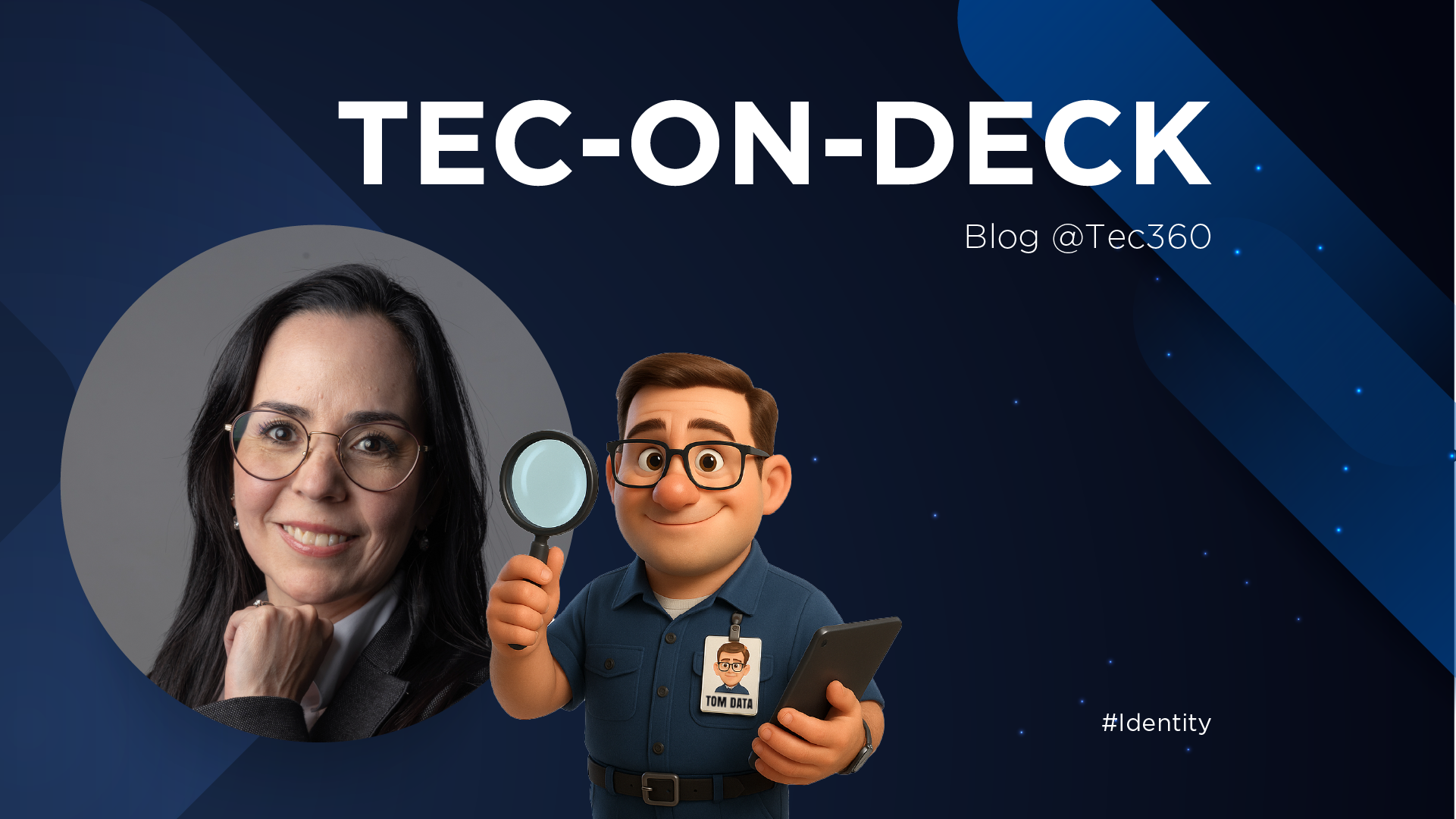
Digital identity is often viewed as just another technical layer within the IT ecosystem. However, for Brenda Elizondo, New Business Director at TEC360, identity is something much deeper: it is the point where security, architecture, and business converge to build digital trust.
His career began with designing security processes and managing compliance controls. It was then that he realized that security is not merely a matter of technology, but a discipline that directly impacts operational continuity and organizational integrity. Over time, his path crossed once again with Identity & Cybersecurity in a context where digital transformation already demanded more than just isolated controls: it demanded governance.
In his experience, the most common mistake he sees in organizations is treating Identity and Access Management (IAM) as a technology project. Purchasing tools before defining governance models, approval processes, or risk metrics often leads to reactive solutions. Authentication works, SSO is active, MFA is configured… but no one has redefined how access is managed or how actual risk is measured.
Brenda clearly distinguishes between a technical implementation and a strategic one. The technical approach aims to get the system up and running; the strategic approach aims to drive transformation. The latter aligns identity with the customer experience, regulatory compliance, operational efficiency, and resilience. In other words, it turns IAM into a business capability.
Lessons Learned
One of the most important lessons I’ve learned from working in security is that theory doesn’t reflect the realities on the ground. Frameworks teach structures; operations reveal business pressures, users looking for the quickest route, and teams prioritizing speed. It is in that constant balance between protection and user experience that identity proves its true value.
It has also learned that governance doesn’t kick in until a critical event occurs: an audit, an incident, or rapid growth that overwhelms controls. It is at that point that organizations discover legacy access points, accumulated privileges, and accounts with no clear owner. The tool didn’t fail; the model did.
For Brenda, identity management means treating identity as a critical business asset. It involves continuous monitoring, periodic access reviews, behavioral analysis, and dynamic adaptation to risk. Every login represents a decision. Every integration represents a potential point of exposure. Every poorly defined policy can lead to an incident.
Vision 2026
Looking ahead to 2026, the outlook is clear: identity will be at the heart of the digital model. In an environment dominated by AI, automation, and API ecosystems, the difference will lie between those who manage identity strategically and those who continue to manage it reactively.
“In this evolution, identity ceases to be invisible. It becomes critical infrastructure. And when it is well managed, the business can operate with confidence.”
– Brenda Elizondo, Director of New Business, TEC360