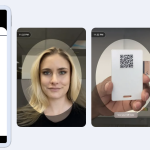

Organizations with the greatest digital ambitions face a familiar foe: access models designed for a bygone era. Accounts that never die, passwords that get leaked, roles that grow unchecked. The alternative isn’t just a cosmetic fix. It’s a paradigm shift called PAF: passwordless, accountless, frictionless. Three coordinated decisions that transform identity into measurable growth.
What PAF fundamentally changes
- From passwords to cryptographic evidence: FIDO2 passkeys, adaptive MFA, risk signals.
- From permanent accounts to temporary access: just-in-time access orchestrated by workflows and automatic revocation.
- From static roles to dynamic policies: ABAC/PBAC that take into account purpose, device, location, and risk.
The combined effect reduces the attack surface, simplifies audits, and eliminates friction in every digital interaction.
Why it's feasible now
This isn't just futuristic thinking. It's the natural evolution of established standards and practices:
- Standards adopted: OAuth2, OIDC, SAML, FIDO2/WebAuthn.
- Aligned ecosystem: identity platforms, cloud services, and partners with mature integrations.
- AI as an accelerator: anomaly detection, session scoring, and response automation.
- Integrate rather than replace: federated directories, coexistence with legacy applications, and phased deployment.
The blueprint that prevents never-ending projects
A well-designed blueprint focuses on integration and governance, not on accumulating tools.
Essential pillars
- Zero Trust with continuous verification and session telemetry.
- Attack Surface Management for true visibility into identities and access.
- Mobility and multicloud as design principles.
- Modern authentication to move toward a passwordless future without breaking what works.
- Automation and workflows for accurate recertifications and revocations.
Results should be expected on a quarterly basis, not annually
- Fewer password-related support tickets and fewer login failures.
- Onboarding in a matter of hours for employees, customers, and partners.
- Audits that shift from reactive to verifiable in near real time.
- Consistent experiences across physical, web, and mobile channels.
Performance framework: identity demonstrated through numbers
Management needs evidence, not promises. A six-dimensional dashboard aligns technology and business:
- Architectural trends: technical debt on the decline.
- Safety: Incidents and TTR on the decline.
- Compliance: automated traceability, reduced audit effort.
- Operation: fewer manual tasks and fewer errors.
- Experience: seamless sessions and increased productivity.
- Business: Cost reduction and faster time-to-market.
Recommended procedure
- Identity Debt Assessment and Risk Map.
- A pilot project for passwordless authentication in a high-impact, low-resistance environment.
- Just-in-time access for third parties and temporary projects.
- ABAC policies in a critical domain with session telemetry.
- Quarterly OKRs linked to financial and customer experience metrics.
- Escalation by domain with executive dashboards.
What changes at the company when PAF arrives
- Faster: less friction, smoother integrations, and launches that don't rely on resets or manual approvals.
- More reliable: verified access, traceability, and automatic response to anomalies.
- More efficient: savings on support and auditing, with the team's energy focused on creating value.
- More appealing: clean user experiences that boost NPS and retention.
- Better prepared: a foundation of trust for AI, APIs, ecosystems, and new digital models.
PAF is an architectural choice that delivers business results. It reduces risk and technical debt while driving productivity and growth. The key isn’t buying more, but integrating better and governing with context.