What that really happens in the break room of a woman who becomes the most dangerous in the world.
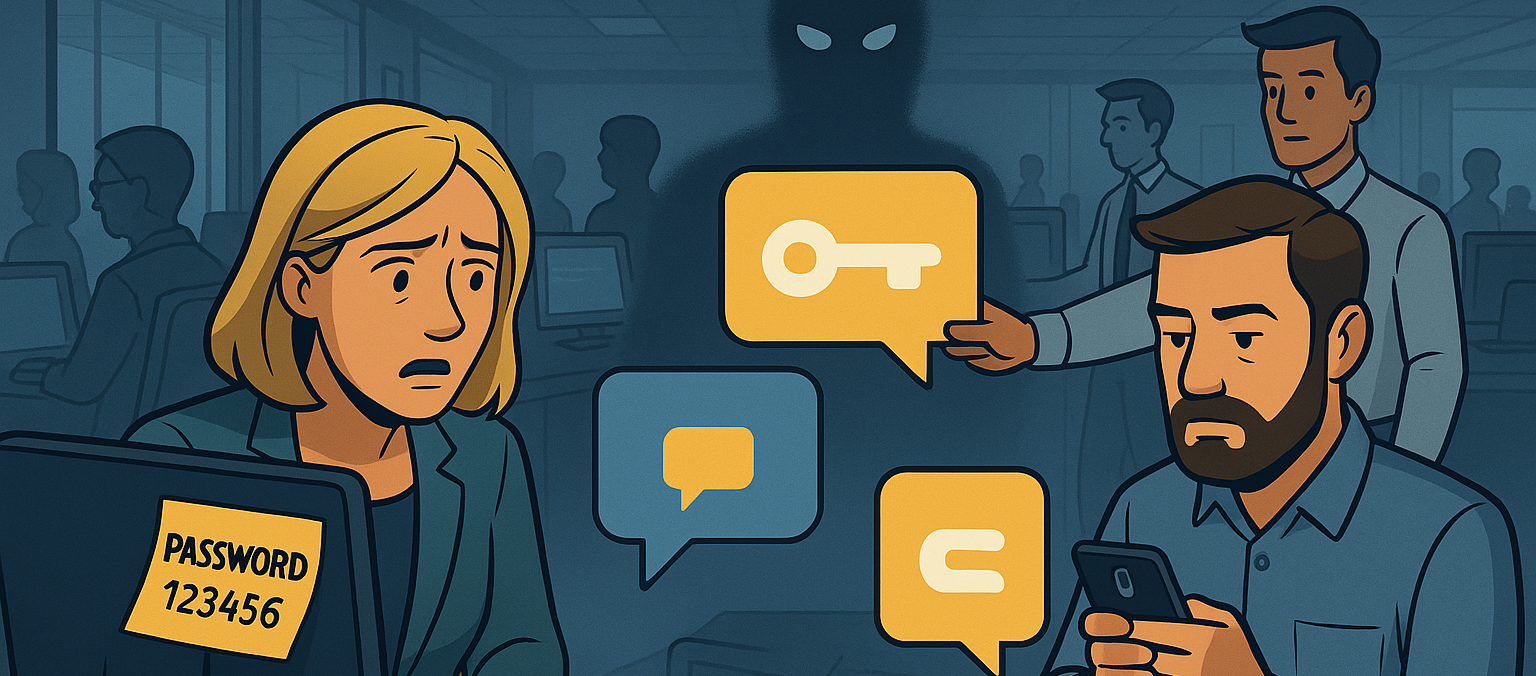
Every morning, it’s the same routine: coffee in hand, casual conversation, and—without realizing it—an exchange of passwords that’s more seamless than any SSO system. “Do you use the same password as your email too?” “I used the coworking space’s Wi-Fi password—that way I won’t forget it.” All with the best of intentions… and the worst possible consequences.
What appears to be a harmless scene in the break room actually represents one of the most common (and most overlooked) sources of vulnerability in corporate environments: the mishandling of credentials. A combination of misplaced trust, lax operational practices, and the lack of automated controls opens the door to unauthorized access, identity theft, and the exposure of sensitive data.
Password Culture: The Enemy Is Among Us
It's not just a matter of individual misconduct. The problem is structural:
- Passwords shared via email or internal chat.
- The same access rights for employees in different departments.
- Lack of segmentation by role or context.
- Reuse of keys across multiple platforms.
In the “most dangerous office in the world,” an attacker doesn’t need to breach firewalls… they just need to eavesdrop for a while in the kitchen.
Invisible access ≠ harmless access
Beyond just logging in, it’s crucial to know who is accessing what, when, and why. This is where solutions like SPHERE and CrowdStrike come in:
- SPHERE helps identify accounts with excessive privileges, unauthorized access, and inadequately protected files.
- CrowdStrike acts as a "silent analyst" that detects suspicious behavior within active sessions, such as unusual data access or lateral movement.
The result: it doesn't matter whether the error was human, technical, or accidental. The system reacts before it becomes a crisis.